





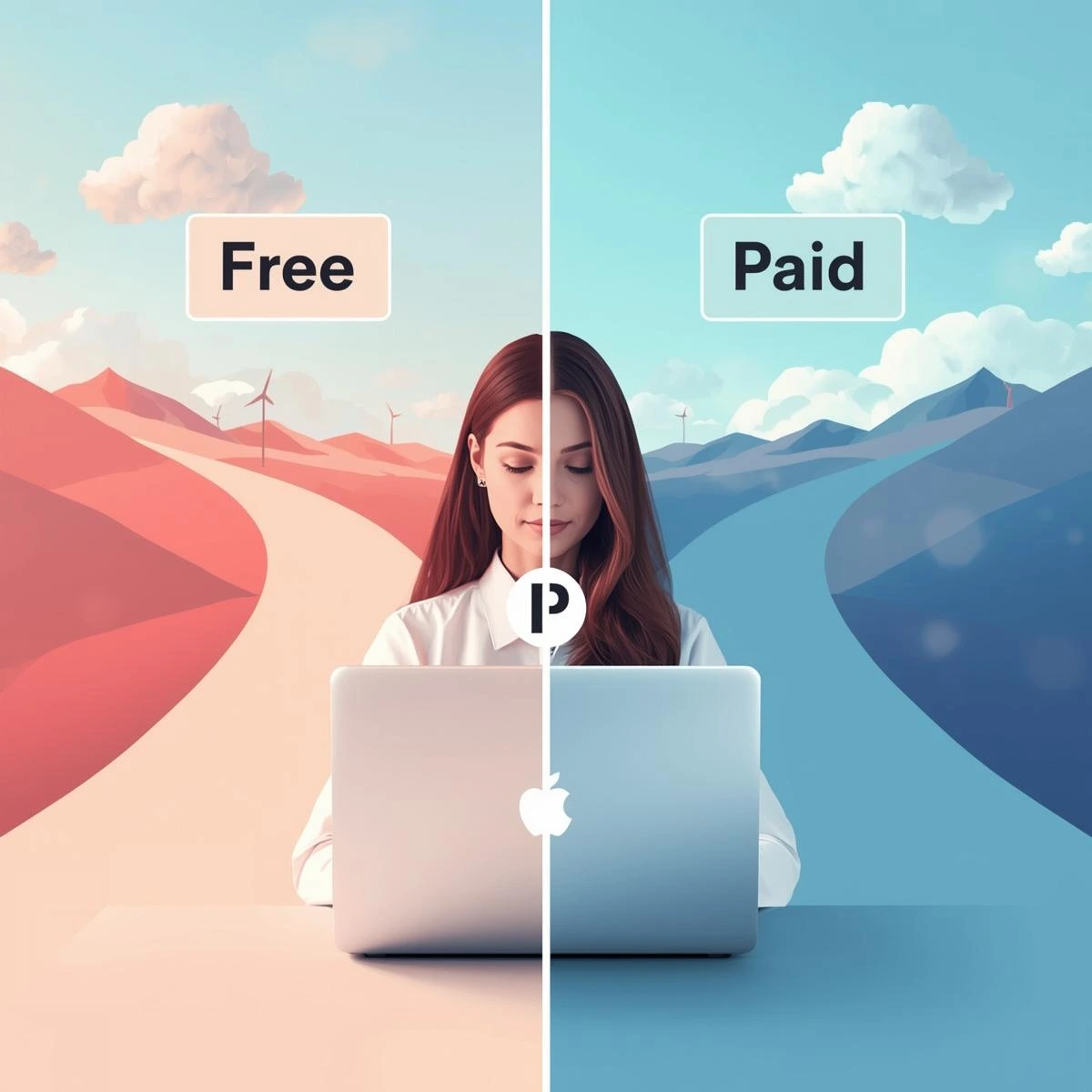
Free vs Paid AI Tools: Do You Really Need to Pay?
AI tools are everywhere now. Most of them have a free and paid option, and the question always arises to us: free or paid AI tools, do I really need to pay anything, or can I use the free version?
For other individuals, the free AI tools are sufficient to do everyday activities. In the case of others, paid plans save much time and stress, which is why it is easy to justify the price. It is all about being aware of what group you are in.
We will subdivide in this guide how free and paid AI tools are different, what you actually receive in your money, and a basic formula of what you should do in order to save or upgrade.
Read more: How to Use ChatGPT for Beginners (Step-by-Step Guide)
What Do We mean by Free vs Paid AI Tools?
To draw a comparison between free and paid AI tools, it is beneficial to identify the concepts of these two terms.
Free AI tools often:
- Provide you with a barebones AI.
- Restrict the number of times you can use it (day /week limits).
- Limit high-end functions (such as some models, speeds, or integrations)
- Present some sort of upsell or account restrictiveness.
Paid AI tools usually:
- Achieve newer or stronger AI models.
- Have larger upper limits or no limits of normal usage.
- Include new functionalities (uploading files, integration, sharing with teams, new responsiveness)
- Be more reliable and have priority access.
However, not all of them operate in this way, but the vast majority of AI products work in this manner: then free gets you into the door, then paid provides you with additional power and comfort.
Read more: What Is AI and How to Use It in Everyday Life (Simple Guide)
How Free AI Tools Usually Work
A lot of experimentation can be done with free AI tools. Most of the novices take months before they consider paying.
The following are what you generally tend to receive with free tools:
- Simple access by way of an able model.
- You are able to chat, type, ask questions, and receive well-meaning answers.
Usage limits
e.g., a given number of messages, prompts, or characters in a day.
Free users are subject to slow responses or temporary restrictions during the rush hours.
Feature limitations
You might not get:
- File uploads (pdf, doc, Spreadsheet)
- Aperture to the latest or the most intelligent model.
- High-tech tools such as crafted workflows or automation.
- Single-user focus
Individuals are mostly expected to utilize free plans as opposed to teams.
Free AI Tools: What They Are Best at
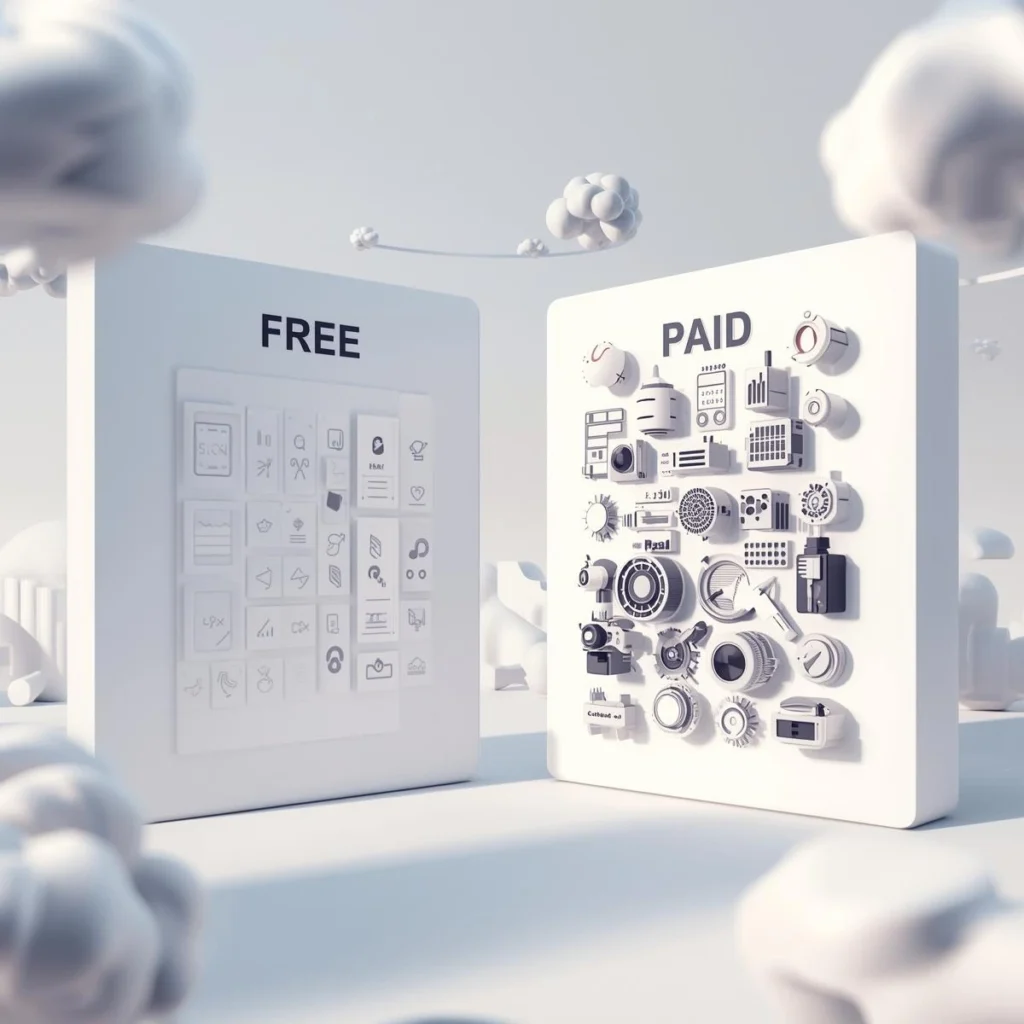
Free tools are typically ample in the event that you:
- Sometimes have difficulties writing messages or emails.
- Like to generate ideas here and there.
- required to have easy explanations of the subjects you are studying.
- Have not yet started using AI in their jobs and are just investigating it.
To most average users, the free tools have a range of 7080 percent of what they need to be able to accomplish.
What You Get When You Pay for AI Tools
And the reason why people pay is that free versions can already help them?
Paid AI is intended to target individuals who use AI more frequently and require greater power, speed, and reliability.
Common benefits include:
- Better or newer AI models
- Less precise, less specific, and more compliant to intricate directives.
- Increased thresholds or unlimited access.
- A limited number of restrictions on the amount of use you can make with the tool in a day.
- Learning to be more consistent during peaks.
Advanced features
- Send and process documents (PDFs, documents, spreadsheets).
- Run AI within other applications (email, documents, project applications).
- Design personalized instructions, templates or auto executions.
- Features of team and collaboration (on some tools)
- Common working areas, common prompts, joint billing.
Read more: How to Write AI Prompts: Simple Guide for Beginners
When it Makes the Most Sense to Pay to Use AI
The payment is usually justifiable in cases where:
- AI will literally save time in your work or business.
- You generate many contents (emails, articles, scripts, documents)
- You tend to reach free usage limits.
- You require such advanced features as document analysis or integrations.
- What is even better is that your time is more than the monthly subscription fee.
Considering that an AI tool can save you at least a couple of hours of actual, paid work per month, it is not hard case to justify a subscription fee.
Read more: ChatGPT vs Other AI Chatbots: Which One Should You Use as a Beginner?
Free vs Paid AI Tools: Side-by-Side Comparison
Here’s a simple comparison to help you see the difference at a glance.
| Feature / Aspect | Free AI Tools | Paid AI Tools |
| Cost | $0 | Monthly/annual fee |
| Model quality | Good, but sometimes older or limited | Newer, more powerful, better at complex tasks |
| Usage limits | Yes, often daily/weekly caps | Much higher limits, sometimes “normal use” uncapped |
| Speed and reliability | Can slow down or be restricted at busy times | More stable, priority access |
| File uploads & analysis | Often limited or not available | Commonly included (docs, PDFs, spreadsheets) |
| Integrations & workflows | Basic or no integrations | Rich integrations with apps and automation tools |
| Best for | Casual users, basic tasks, experimentation | Serious use, work, business, content production |
| Risk of “running out” daily | Higher | Lower |
This doesn’t mean paid is “better” for everyone. It just means you get extra capabilities, only worth it if you truly use them.
Which Is Right for You? (By Type of User)
Let’s look at free vs paid AI tools from your perspective: what you’re doing in real life.
1. Casual Everyday Users
Examples:
- You occasionally need help writing a tricky email
- You sometimes ask AI to summarize an article
- You like to brainstorm ideas now and then
Free is usually enough for:
- Email drafts and rewrites
- Simple summaries
- Casual brainstorming and explanations
You probably don’t need to pay unless you start relying on it every single day.
2. Students and Lifelong Learners
Examples:
- High school or college students
- Adults learning new skills for personal growth
You might use AI to:
- Explain difficult concepts
- Generate practice questions
- Organize notes or study plans
Free is often enough if:
- You’re mainly asking for explanations and simple help
- You use AI a few times per day, not constantly
Paid might be worth it if:
- You’re constantly hitting usage limits
- You’re working with long documents or intensive research
- You’re using AI for professional-level writing or projects beyond school
Remember: always follow your school’s rules about AI use.
3. Freelancers and Solo Creators
Examples:
- Writers, designers, marketers, coaches, consultants
- People running small YouTube channels, blogs, or social accounts
You might use AI for:
- Scripts, posts, newsletters, and articles
- Client communication (emails, proposals, briefs)
- Brainstorming offers, products, and content ideas
Paid tools are often worth it if:
- AI becomes a daily part of your work
- You’re saving hours each week using AI for content and planning
- You need advanced features (file uploads, project workflows)
If you’re earning money from your work, compare the subscription cost to the time you save. Often, even one extra client or one saved afternoon per month can cover it.
4. Small Business Owners
Examples:
- Local businesses, service providers, online shop owners
You might use AI for:
- Marketing (emails, social media, website copy)
- Customer support replies and FAQ drafting
- Basic planning, documentation, and SOPs
Paid tools are usually worth exploring if:
- AI helps you communicate with customers faster and more clearly
- You’re using AI to create regular content (blogs, email campaigns, product descriptions)
- You handle a lot of written communication and planning
In this case, AI is not just a convenience; it’s part of how you run your business.
5. Power Users and Professionals
Examples:
- People working in tech, marketing, content, operations
- Anyone using AI for high-volume work or advanced workflows
You might use AI for:
- Large volumes of writing and editing
- Deep research support and analysis
- Document-heavy work (reports, transcripts, contracts, SOPs)
- Integrations with tools, automation, or no-code workflows
For you, paid AI is almost always worth it, as long as:
- You choose a tool that fits your workflow
- You actively use advanced features (files, integrations, higher limits)
A Simple Framework: 5 Questions to Decide If You Need a Paid Plan
Not sure where you fit? Ask yourself these 5 questions:
- How often do I actually use AI tools?
- Less than a few times a week? Free is probably fine.
- Daily or multiple times per day? Consider paid.
- Do I regularly hit usage limits?
- If you see “you’ve reached your limit” messages often, that’s a sign.
- Does AI save me real time or money?
- If AI helps you do billable work faster or win more business, paying can easily make sense.
- Do I need advanced features (files, integrations, better models)?
- If your tasks are getting more complex, free plans may feel too restrictive.
- Would losing access or speed seriously hurt my work?
- If yes, reliability and priority access from a paid plan can be worth it.
If you answer “yes” to 3 or more of these, it’s time to seriously consider a paid AI plan.
How to Get the Most Out of Free AI Tools
Even if you stick with free, you can squeeze a lot of value out of it.
1. Learn to Write Better Prompts
Clear prompts are more important than fancy features. You can:
- Add context (“I am a small business owner…”)
- Specify the format (“give me bullet points”)
- Set the tone (“friendly but professional”)
Good prompts can make a free tool feel much more powerful.
2. Focus on High-Value Tasks
Use your limited usage for tasks that:
- Save the most time
- Reduce stress or mental load
- Help you learn faster
Examples:
- Writing or editing important emails
- Planning your week
- Summarizing long texts you don’t have time to read fully
3. Keep a Library of Prompts
If a prompt works well, save it somewhere:
- In a notes app
- In a document or sheet
- As reusable “templates”
Reusing strong prompts helps you get better results faster, even on free plans.
4. Use Multiple Free Tools Carefully (Optional)
Some people rotate between different free tools to avoid limits. This can work, but:
- It’s easy to get overwhelmed
- Your work gets scattered across tools
If you try this, choose one “main” AI and one “backup” tool, not five or six.
How to Choose a Paid AI Tool Wisely
If you decide to move from free vs paid AI tools and upgrade, choose carefully.
1. Match the Tool to Your Main Use Case
Ask yourself:
- “Is my main need writing? Studying? Planning? Business content? Document analysis?”
Pick a tool that excels at what you use most, not just the one with the longest feature list.
2. Start with a Short Test Period
If there’s a monthly option or trial:
- Use it intensely for a few weeks
- Track:
- How often you use it
- How much time you save
- Whether it changes the quality of your work
You barely touch it, cancel. If you use it every day, it may be worth keeping.
3. Check Privacy and Data Policies
Before you feed sensitive data into any paid tool, check:
- How your data is stored
- Whether your content is used to train models
- Any special business or enterprise options for added privacy (if needed)
4. Don’t Overbuy Features You Won’t Use
It’s easy to get excited by advanced features you don’t actually need.
If you’re not using:
- Team seats
- Complex integrations
- Automation tools
…you may not need the highest tier plan yet. Start smaller.
Common Myths About Free vs Paid AI Tools
Let’s clear up some misunderstandings.
Myth 1: “Paid AI tools are always better.”
Paid tools offer more power and features, but better for you depends on your usage. If you barely use AI, paying won’t magically make it more helpful.
Myth 2: “Free tools are useless.”
Not true. Many free AI tools are incredibly capable, especially for basic writing, brainstorming, explaining, and planning. The biggest limit is usually how you use them, not just the fact they are free.
Myth 3: “If I’m serious, I must pay.”
Being serious means you make smart decisions about your time and money. If free tools already do what you need, there’s nothing “unserious” about staying free.
Myth 4: “Once I pay, I’ll never have to think about my prompts again.”
Even with the best models, clear prompts and good instructions still matter. Paying improves the engine, but you still have to steer the car.
Key Takeaways
- The free vs paid AI tools decision depends on how often you use AI, how critical it is to your work or studies, and whether you need advanced features.
- Free AI tools are usually enough for casual use, basic writing, simple summaries, and learning.
- Paid AI tools make more sense when you rely on AI daily, hit limits often, or use it to earn money or save significant time.
- You can get a lot more from both free and paid tools by writing better prompts, reusing prompt templates, and focusing on high-value tasks.
- Before upgrading, test a paid plan for a short period, match it to your real needs, and make sure the benefits you get are worth the cost.
FAQs
Are free AI tools good enough for most people?
For many everyday users, yes. If you only use AI for occasional emails, ideas, or explanations, free tools are usually enough. You only really feel the need to upgrade when you use AI heavily or hit limits often.
What’s the biggest benefit of paid AI tools?
The biggest benefits are usually better model quality, higher usage limits, more reliability during busy times, and advanced features like file uploads and integrations with other apps you use for work.
How do I know if a paid AI tool is worth it?
Track how much time it saves you and how often you use it. If it saves you hours of work each month or helps you produce work you can get paid for, the subscription may be easily justified. If you barely use it, it’s probably not worth it yet.
Can I switch back from paid to free?
Yes. Many tools let you downgrade or cancel. You can use a paid plan during busy seasons or important projects, then go back to free if your needs drop.
Are free AI tools less safe than paid ones?
Safety depends more on the company’s policies than on whether a plan is free or paid. Some tools offer additional privacy options on higher-tier plans, but you should always avoid sharing highly sensitive data, regardless of your plan.
Should students pay for AI tools?
Most students can get a lot of value from free tools for explanations, practice questions, and organizing notes. Paying might make sense if you use AI constantly for serious, non-school projects or professional work, and you’re hitting limits often. Always follow your school’s rules for AI use.